At the end of this post, I will tell some interesting true stories about some exams and candidates.
In about 1994, while working for the DA’s Office, the county was sending the chief investigator and a sheriff’s lieutenant to the months-long, live-at, polygraph school. The lieutenant had some family issues come up and couldn’t go. I said, “I’ll go…pick me, pick me.” I got OK’d to go. I always figured polygraph was voodoo crap, and it didn’t work. Well, I discovered differently. It does work. Is it perfect? No. The examiner has a lot to do with it. There are many different types of exams. A single issue exam with the questions formulated correctly is pretty close to 100% accurate. You read results stats on single-issue tests, and they give a score of accuracy in the 90’s percent. That is because they count inconclusive results as a mistake.
The pre-employment exams are multiple issue and are not as accurate. The particular exam I used was designed that if there was a false result, it was in the examinee’s favor. So, in other words, you are more likely to have a result of truth when it was, in fact, a lie, not the other way around. I think the stats are 76% accurate on those.
OK, you’ve passed the interview and have been invited back for the polygraph or start of background. Most of the agencies I did polygraphs and backgrounds for did the polygraph or CVSA (Computerized Voice Stress Analysis) next, so if there are issues, they don’t waste time and money on the background. Just a few do it after the background; a rarer few do both.
The ones that do both do it because the examiner can now ask questions that couldn’t be asked before a conditional job offer. Legally (federal law), an agency can’t give a conditional job offer until the background is complete. Those questions mostly pertain to medical and psychological issues.
If the polygraph examiner is both examiner and background investigator, the initial background interview is combined, but that is not the usual case.
The candidate is given a polygraph questionnaire to fill out days before the exam. The one I used was 181 questions about thefts, work issues, illegal sexual activity, felonies, drugs, and all manner of illegal activity, from DUI to vandalism. They are supposed to bring it to the exam. Sometimes the agency wants the PHS reviewed as well.
The polygraph/CVSA usually takes a minimum of two hours. Most of that time is going over the Questionnaire and PHS. After reviewing those documents, the examiner sets up the questions that will be asked on the polygraph. All the questions on the questionnaire could not possibly be asked on the exam, so they are distilled down. Different examiners are taught other methods to conduct the exam; this one is the most common.

The questions are pretty standard, and the changes that the examiner makes are something like this, for example, about theft; Other than what we talked about, have you ever stolen anything?”
The examiner will review the questions with the candidate in a different order than they will be asked on the exam.
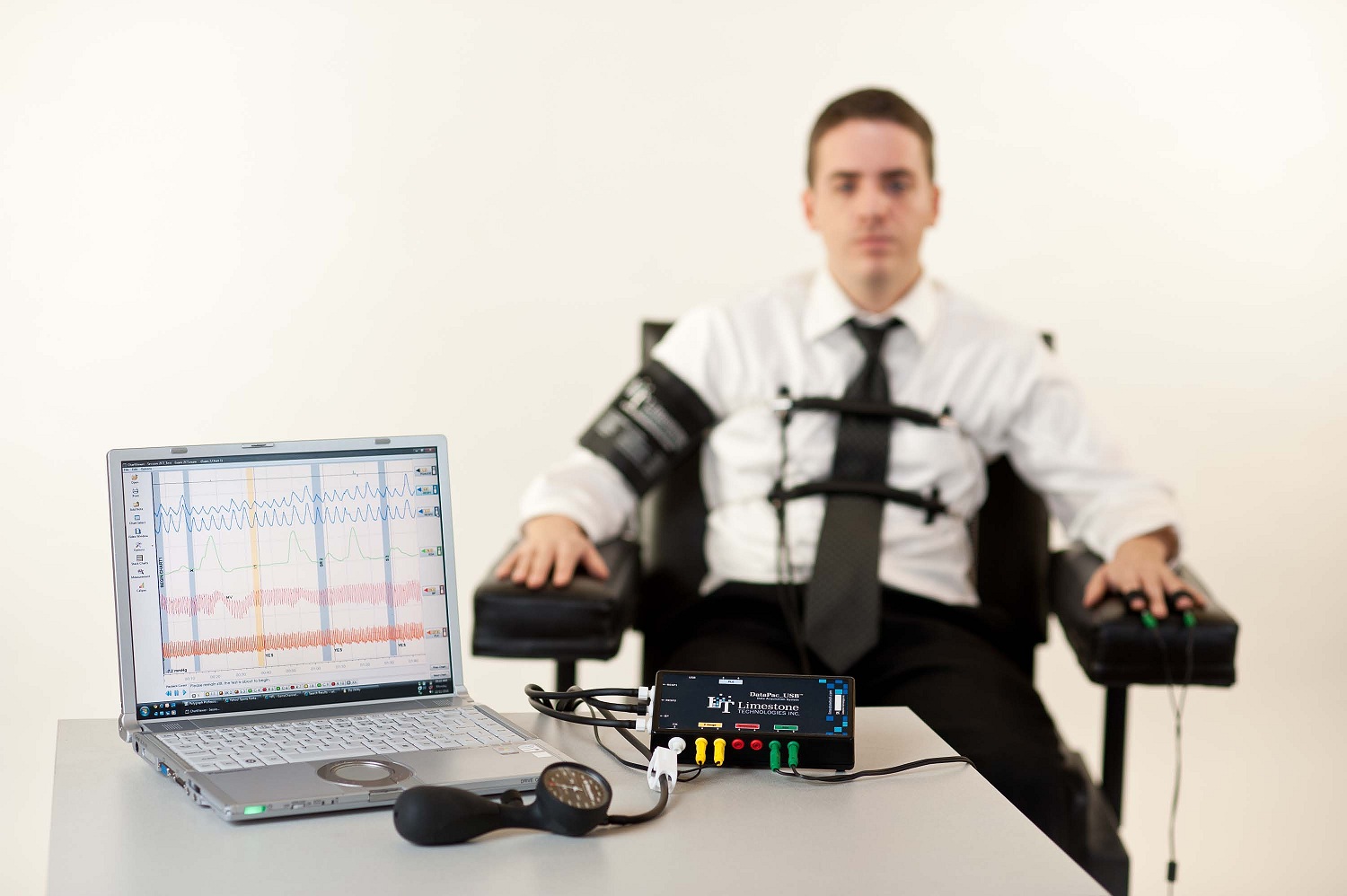
The candidate is hooked up to the polygraph, and everything that each piece of equipment does is explained to them. I use a three-set exam. Each one takes about 10 minutes or less, and you get a short break between them.
When the exam is through, and there are good charts (polygraph speak), the candidate will be asked to wait in another room while the examiner scores the exam.
The candidate is brought back, and any discrepancies are discussed. If you take a polygraph and the results are not given to you, that is not the norm or acceptable practice. You put the effort out to prep and take the exam, and you deserve to know the results. You should already know the results. If you lie, you don’t pass if you tell the truth, no problems.
Now that I’ve said that, there are some exceptions. Some questions bother some people, and these could be scored as an area of concern. A typical example is the question, “Other than what we talked about, have you ever been involved in any illegal sexual activity?” Hopefully, all that was discussed before the exam. The most common revelation was something like when the candidate was 19, he/she had a 16-year-old girlfriend/boyfriend with who they had sex with. Nobody gives a rat’s ass, by the way (except for the girl’s parents), and where were these 19-year-old girls when I was 16?
Back to the subject, it is not uncommon for someone sexually abused as a child or sexually assaulted as an adult to “hit” on that question. Because if they didn’t talk to me about it, which they do not have to, technically and in their minds, they have been involved in illegal sexual activity, but as the victim. I finally got smart and would give an admonition before the exam on the illegal sexual activity question, telling the candidate that if they were the victim of illegal sexual activity, that was not what the question was asking. The question is about as the perpetrator.
If there were any results showing areas of concern, the candidate would have the opportunity to come clean or explain why there was possibly a “hit” on the question. Being nervous about the exam is normal, and that does not make you hit on one subject.
Now for the stories:

A lot of these are about the illegal sexual activity question. I don’t include so many of these because I’m a pervert. However, they seem to be of most interest when I tell people about the polygraph, especially when I’m teaching a class to Background Investigators about the polygraph.
Whoops
I was doing an exam for a small agency, and the candidate for this exam was a local security guard. He hit on the question about illegal sexual activity. He swore to me he was telling the truth. I told him that I needed to know the truth to clear the issue as I was sure he was lying. He finally admitted he had sex with a 14-year-old girl when he was 19 years old. He was 32 years old. I said OK, and we conducted a single-issue exam asking, “Other than what we talked about, have you ever been involved in any illegal sexual activity?” His answer was, “no.”
The results were again deception. I told him that he was still lying and I need to know the truth. After some more interviewing, he admitted that when he was 23, he had sex with a 14-year-old girl. Geez! I asked if that was all, is there anything more? He apologized and assured me that was it.
Usually, a person is no longer reactive to the polygraph because psychologically, they are worn out. So the best usually the examiner gets is inconclusive at this point, but this guy was still reacting.
OK, normally, I wouldn’t keep going on like this, but damn, I had to know. So, I ran another exam. You guessed it, deception.
I told the candidate he was lying, and he has to come clean and be honest. At this point, it was an interrogation rather than an interview because I was not going to run another exam. Finally, he admitted to me that last week he had sex with a 14-year-old girl. I asked him who, when, and where it was, the circumstances, etc. I thanked him for finally telling the complete truth and sent him on his way. I contacted the police agency in the jurisdiction where it happened. They conducted an investigation and arrested the candidate. He served some time. Keep your daughters safe.
Animal Lovers

I got a lot of admissions regarding sex with animals. Most who admitted to it were females, and it mostly involved licking. It’s not that I think males do it less; it’s that they are less likely to admit to it. I did get my share of males whose family pet likes peanut butter…by the way, if you did that when you were 12, it’s really not an issue, well, for the exam anyway.
Farm-Raised
I had a candidate who admitted to me that he was raised on a goat farm and had sex with the goats while going through his questionnaire. OK…how many times? Hundreds. OK, when was the last time? Last week. I went ahead and ran the exam, and he passed with flying colors. I thanked him and sent him on his way. I did tell him the goat thing “might” be an issue for the department, but lying about it was an automatic disqualification.

Between exams, I told the agency’s professional standards sergeant about it. He said, “You have got to tell the chief about this!” So we went over to the chief’s office, and I told him about this candidate. He said, “Well, that guy is not getting hired here.” I looked puzzled and told the chief, “I thought he was a perfect fit for his department.”
Trafficking
A woman for a different agency was applying for a public safety dispatcher position and had already conducted the investigator’s pre-background interview. During the questionnaire and PHS review, she was pretty clean on the drugs, including marijuana. However, right before I started the exam, she admitted that she sold and transported large quantities of marijuana and other illegal drugs, which was her source of income. I asked her why she didn’t list it on her paperwork and tell the background investigator about it. She said she wanted everyone to get to know her first and that she was a good person before revealing the drug stuff, and maybe she could get hired. Yea, no… Needless to say, I didn’t even run the exam.
Don’t Trust Polygraphs
I ended up conducting exams on the same candidates for multiple agencies, sometimes many years apart. I’ve had some candidates tell me they don’t trust the polygraph because when they had the exam five years ago for X agency, the examiner told me I was lying on the drug question, and I wasn’t. Well, stupid, apparently you don’t recognize me because I gave you that exam and after I gave you the results, you admitted you had lied on the question.
I have had numerous similar experiences with candidates.
I have hundreds of similar stories, but there is only so much people will read 🙂 .
If you have any questions about polygraphs, feel free to ask me. If you want to ask in confidence, just ask me to email you in the comments section. I will see your email, but the public will not.
 Scattered Thought
What about the fabulous people who went to polygraph school with you?
LikeLiked by 1 person
Yeah, what about them?
LikeLiked by 1 person